
Walk down any commercial strip in West Hollywood or Santa Monica after dark and you will notice something: the businesses doing the most foot traffic are almost always the ones you can read from a distance. Their signage is lit, legible, and impossible to ignore. More often than not, those signs are channel letters.
For business owners in Los Angeles, storefront signage is not a cosmetic afterthought. It is doing real marketing work every single hour the business exists, day and night, rain or shine. And among all the sign formats available, LED channel letters consistently deliver the highest combination of visibility, durability, and brand impact.
Here is a thorough look at why that is, and what business owners should actually understand before commissioning a set.
What LED Channel Letters Actually Are
Channel letters are individually fabricated, three-dimensional letterforms, typically made from aluminium or steel, that are mounted directly to a wall, raceway, or building fascia. Each letter is its own structure. That separation is what gives the sign its distinctive, premium look compared to a flat printed panel.
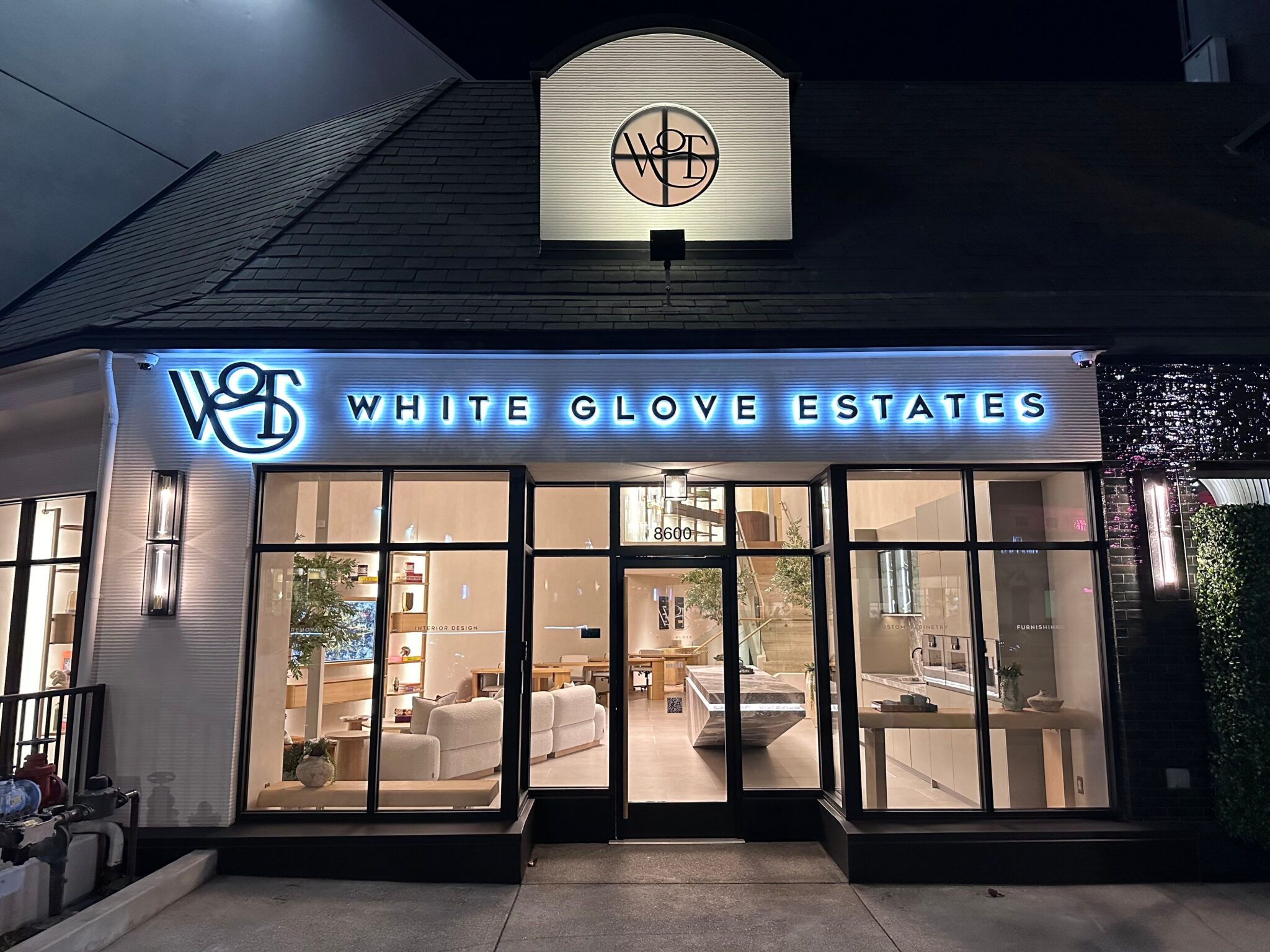
LED channel letters add internal illumination through LED strips or modules housed inside each letter. The face of each letter, often made from acrylic, diffuses the light outward. Depending on the design, the glow can face forward, backward (halo-lit), or both.
For a more detailed breakdown of how illuminated letter systems work across different formats, backlit signs and letters covers the full range of options and how each one performs in different installation contexts.
The Visibility Advantage: Why Light Changes Everything
There is a well-documented principle in retail and commercial property research that signage visibility directly correlates with customer acquisition. The Sign Research Foundation has published findings suggesting that signage quality influences purchasing decisions for a significant portion of first-time visitors to a business.
In Los Angeles specifically, this matters more than in most cities. Why? Because LA is a driving city. A huge percentage of potential customers are passing a storefront at 30 to 45 mph, often in traffic, often distracted. You have roughly two to three seconds to register on their radar.
Channel letters win in this scenario for a few specific reasons:
- Three-dimensional depth makes the letters visually distinct from flat signage, which tends to disappear into a building facade
- LED illumination ensures readability at night and in direct sunlight without fading or washing out
- Individual letterforms allow the eye to process the name faster than a continuous lit box
- Height and scale are easier to achieve with channel letters without the sign looking cheap or oversized
On streets like Melrose Avenue or Ventura Boulevard, where dozens of businesses compete for the same set of eyeballs, these distinctions genuinely move the needle.
Branding Consistency: More Than Just Visibility
Visibility gets someone to look. Branding makes them remember. Channel letters do both, and that dual function is part of why they are so widely used by established brands and growing independents alike.
Because each letter is fabricated individually and finished to spec, the colour, font, and finish can be matched precisely to a brand’s visual identity. This level of accuracy is difficult to achieve with printed panels, which can shift in colour over time or under different lighting conditions.
Consider a scenario: a restaurant group opens a second location in Culver City. Their original sign in Silver Lake used a specific shade of deep burgundy. With channel letters, the acrylic face colour and internal LED temperature can be calibrated to match that burgundy consistently, even across different fabricators. The result is a cohesive brand presence across multiple sites, which builds customer recognition and trust.
Some specific finish options worth knowing:
- Standard front-lit: LED light projects through a coloured acrylic face, producing a solid, bold colour glow
- Halo-lit (reverse channel): Light projects behind the letter, creating a backlit halo effect against the wall. This reads as premium and is popular for upscale retail and hospitality
- Open face: No acrylic cover, exposing the internal LEDs directly. This mimics the warmth and visibility of traditional neon with more flexibility
- Combination lit: Both front and halo illuminated, offering maximum presence at night
Choosing the right finish is not just a design decision. It affects how the sign reads at different distances, under different ambient light conditions, and at different times of day.
Energy Efficiency and Long-Term Cost
This is a practical point that often gets overlooked during the initial sign decision. LED channel letters are significantly more energy-efficient than older neon or fluorescent alternatives.
LED modules typically consume 50 to 70 percent less electricity than neon equivalents. Over the course of a year, for a mid-sized storefront sign running 12 to 14 hours per day, that difference adds up to a meaningful reduction in operating costs.
Beyond electricity, maintenance is dramatically simpler. LED modules have rated lifespans of 50,000 hours or more under normal operating conditions. Neon tubing, by contrast, requires more frequent servicing and is fragile under vibration or impact.
For property managers overseeing multi-tenant commercial buildings, this reliability factor matters. A sign that fails or dims inconsistently reflects poorly on the property and creates friction with tenants. LED channel letters tend to hold their performance for years without intervention.
Navigating LA’s Sign Permitting Process
Here is a practical reality that surprises many first-time sign buyers: in Los Angeles, almost every externally mounted illuminated sign requires a permit. This includes channel letters. The permitting process involves submitting drawings, engineering calculations in some cases, and compliance verification against the city’s municipal code, which varies by zone and district.
Permit timelines in LA can range from a few weeks to several months depending on the location, the sign type, and whether the property falls under any special zoning overlays such as those covering historic districts or specific neighbourhood plans.
This is one of the strongest reasons to work with a sign company that handles permitting in-house rather than outsourcing it or leaving it to the client. Los Angeles Sign Company has managed this process across multiple LA neighbourhoods for over 20 years, which means they understand the specific requirements for areas like Beverly Hills, Downtown LA, and Pasadena, where sign codes differ noticeably from standard LA municipal rules.
For anyone planning a storefront build-out or rebrand with a hard opening date, permitting timelines need to be part of the project schedule from day one, not something addressed after the sign is already fabricated.
Where Channel Letters Work Best (and Where to Think Twice)
LED channel letters are not always the right answer. Understanding their ideal contexts helps with decision-making.
Strong use cases:
- Retail storefronts on high-traffic streets where night visibility matters
- Restaurant and hospitality venues where ambiance and brand tone intersect
- Multi-unit commercial properties where tenants need differentiated, legible signage
- Businesses in high-competition corridors where premium appearance creates a status signal
- Locations with significant evening or night-time foot traffic
Situations to reconsider or adapt:
- Heritage buildings with strict facade restrictions may require halo-lit or wall-mounted alternatives to avoid surface penetration
- Very small storefronts may benefit more from a well-designed cabinet sign or window lettering if wall depth is limited
- Temporary or pop-up retail may not justify the fabrication cost for a short-term run
The format is also worth matching to the architectural context. A set of sleek sans-serif halo-lit letters reads very differently from bold, front-lit block letters. Both can be executed in channel letter format, but the design brief should drive the fabrication spec, not the other way around.
Key Takeaways
- LED channel letters offer a combination of three-dimensional depth and internal illumination that flat panel signs cannot replicate, giving LA businesses a significant visibility advantage in high-traffic conditions.
- The individual letterform format allows precise brand colour matching and finish customisation, which supports visual consistency across multiple locations.
- LED illumination reduces operating costs compared to neon or fluorescent alternatives by 50 to 70 percent, with significantly longer maintenance cycles.
- In Los Angeles, illuminated signs require permits, and the process is complex. Working with a sign partner who manages permitting directly is essential for meeting deadlines.
- Format selection, including front-lit, halo-lit, open face, or combination, should be driven by brand goals, ambient light conditions, and architectural context, not just aesthetics.
Frequently Asked Questions
How long do LED channel letters typically last? LED modules used in channel letters are rated for 50,000 hours or more under normal conditions. For a sign running 12 hours per day, that translates to over a decade of reliable performance before any meaningful degradation. The letter casings themselves, typically aluminium, are durable and weather-resistant, so the overall sign often outlasts its original installation context.
Do LED channel letters require planning permission in Los Angeles? Yes. Almost all externally mounted illuminated signage in LA requires a permit from the Department of Building and Safety. The requirements vary by zone, district, and building type. Some areas, such as historic preservation overlays or specific neighbourhood plans, have additional restrictions. A sign company experienced with LA’s permitting process can assess requirements during the site survey stage.
What is the difference between front-lit and halo-lit channel letters? Front-lit letters have an acrylic face through which the LED light projects outward. Halo-lit, or reverse channel, letters face the LEDs toward the wall, creating a glow behind the letterform rather than through it. Front-lit is bolder and more readable at distance. Halo-lit creates a softer, premium aesthetic that works well for upscale retail, hotels, and professional services.
Are LED channel letters suitable for all building types? They work across most commercial building types, but installation method varies. Standard channel letters can be mounted directly to a wall or on a raceway (a metal backing panel). For buildings where penetrating the facade is restricted, a raceway mount keeps all hardware on the surface. Listed buildings or those in historic districts may face additional restrictions, which should be clarified during the permitting phase.
How much do LED channel letters cost? Fabrication and installation costs depend on letter size, finish type, number of characters, installation complexity, and permitting requirements. There is no standard price because every project is custom. Getting an accurate quote requires a site survey and design consultation, which most reputable sign companies provide before committing to any figures.
Conclusion
Signage is one of the few marketing investments that works continuously without any additional spend after installation. A well-fabricated set of LED channel letters on a busy LA street is doing brand work at midnight just as effectively as it does at noon.
The decision is worth taking seriously: not just choosing the format, but understanding the finish options, the permitting timeline, and how the sign will actually read in the specific light conditions of that location. Businesses that get those details right tend to end up with signage they keep for a decade. Those that rush the decision often find themselves replacing it sooner than expected.
If you are at the early stage of planning a storefront sign or a property rebrand, starting with a site survey and a clear brief will save time and money at every stage that follows.
