
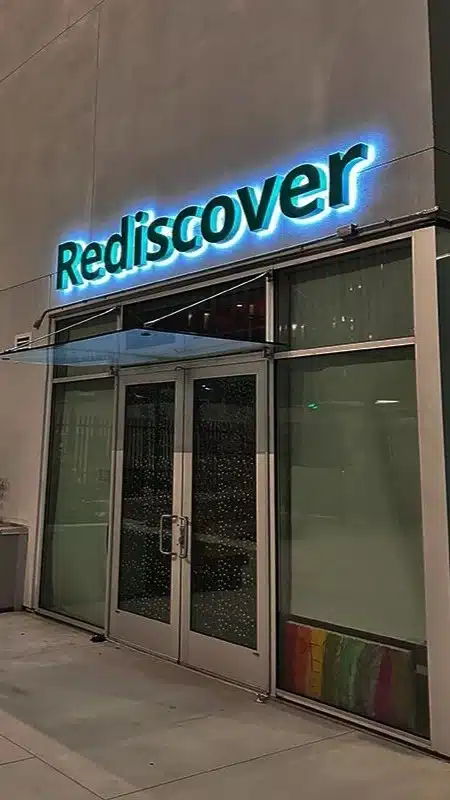
Few cities have a deeper relationship with neon than Los Angeles. From the marquees on Hollywood Boulevard to the late-night diners along Sunset and the design-forward storefronts in Silver Lake, neon has been part of how LA businesses get noticed for nearly a century. The decision today is rarely “should I use neon,” but rather which kind. Custom neon signs in Los Angeles now come in two distinct forms: traditional hand-bent glass neon and modern LED neon flex. Both can produce the same warm, glowing aesthetic from across the street, but they differ in how they are made, how long they last, what they cost to maintain, and where each one belongs. Our custom neon sign service covers both options end to end, from design through installation.
This guide breaks down how glass and LED neon are built, the practical pros and cons of each, and how to decide which type fits your business. Whether you are opening a restaurant in Culver City, fitting out a bar in Hollywood, refreshing a salon in Santa Monica, or branding a creative office in Downtown LA, the same comparison framework applies.
A Quick Look at LA’s Neon Tradition
Neon arrived in Los Angeles in the late 1920s and quickly became the visual language of the city. Theaters, motels, drive-ins, diners, and storefronts all used hand-bent glass tubes filled with neon and argon gas to project identity at street level. Many of those original signs still operate today, especially in landmark districts and on heritage commercial corridors. That long history means LA buyers tend to care about the look of neon at a level most other cities do not, which is why understanding the difference between glass and LED neon matters before specifying a sign.
How Glass Neon Signs Are Made
Traditional neon is a craft product. A trained glass bender heats sections of clear or colored glass tubing, shapes them by hand to follow a custom pattern, evacuates the air, fills the tubes with neon or argon gas, and seals them with electrodes at each end. A high-voltage transformer then energizes the gas, which produces the steady, warm glow that defines authentic neon.
What that craft delivers:
- Genuine neon glow with subtle color variation along each tube
- True visual depth from real, cylindrical glass
- The crackle and warmth older buyers, photographers, and film crews specifically look for
- The ability to follow complex curves and custom typography that machine-extruded products cannot replicate exactly
The trade-offs are also real. Glass neon is fragile, requires more careful installation and maintenance, draws more power than equivalent LED, and depends on a small and shrinking pool of skilled benders.
How LED Neon Signs Work
LED neon flex looks like glass neon from a few feet away, but the construction is completely different. Tightly spaced LEDs are mounted along a flexible PVC or silicone strip, then encased in a translucent tube that diffuses the light into a smooth, continuous glow. The whole assembly runs on low-voltage DC power instead of a high-voltage neon transformer.
What LED neon delivers:
- Lower energy draw, often a fraction of comparable glass neon
- Longer rated life with no gas to leak and no glass to break
- Lighter weight, simpler installation, and easier shipping
- Wider color range, including options that do not exist in traditional gas neon
- Safer indoor use because the operating voltage is much lower
The trade-offs are aesthetic. To a critical eye, LED neon reads slightly more uniform than the warm, irregular glow of real glass neon. The tube is also typically thinner, which can flatten the visual presence of the sign at very close range.
Glass Neon vs LED Neon: Side-by-Side Comparison
For most LA business owners weighing custom neon signs, the head-to-head comes down to these factors:
- Authentic look: Glass neon wins, especially up close and on camera
- Energy efficiency: LED neon wins clearly
- Lifespan: LED neon wins, with longer rated hours and fewer fragile parts
- Color range: LED neon wins on variety; glass neon wins on subtle warmth
- Indoor use: LED neon is generally preferred for low-voltage safety
- Outdoor durability: Both can be specified for outdoor use; LED neon tends to be more resilient to vibration and minor impact
- Repair and maintenance: LED neon is generally simpler; glass neon requires a specialist
- Heritage and historic restoration: Glass neon wins by default
- Upfront cost: Glass neon is typically the higher-priced option for equivalent designs
Neither option is “better” universally. The right answer depends on the business, the install location, and what the sign needs to do.
Where Each Type Fits Best in Los Angeles
When Glass Neon Is the Right Call
Glass neon is usually worth specifying when authenticity matters. Examples include:
- Heritage restaurants, bars, and theaters that want signage consistent with original mid-century or pre-war storefronts
- Hospitality spaces (cocktail bars, lounges, hotels) that depend on the warm, photogenic glow real neon delivers
- Film and photo backdrops where on-camera authenticity is part of the brand
- Restoration of existing landmark signage on properties in Hollywood, Downtown LA, or Venice
For owners restoring or rebuilding historic signage, our broader custom sign services include historical sign restoration alongside new design and manufacturing, so a vintage glass build is fully supported.
When LED Neon Is the Better Choice
LED neon usually wins for new commercial installs where the priority is reliability, energy use, and design flexibility. Strong fits include:
- New restaurant, café, and quick-service storefronts in high-foot-traffic districts
- Retail and salon interiors that run signage from open to close, every day
- Creative office branding in mixed-use buildings where low-voltage signage is preferred by property managers
- Pop-up installations and event signage that need to travel without breaking
- Brand colors that fall outside the standard palette of available neon gases
Permitting and Installation Considerations in Los Angeles
Both glass and LED neon are illuminated signs, which means most exterior installations in the City of Los Angeles require a sign permit and may require electrical sign-off as well. Specific requirements vary by zoning, by property type, and by whether the building is in a designated historic preservation zone or sign district. The practical implications:
- Exterior signage projects typically need to be designed to meet local size, brightness, and placement rules before fabrication starts
- Historic districts may have additional review for any change to a building’s signage
- Interior neon (behind glass, hung indoors) is generally simpler to install and may have fewer permitting steps
- Engineering drawings and stamped plans may be required for larger or higher-mounted signs
A clean process starts with a site survey, a clear design brief, and confirmation of permitting requirements before manufacturing begins.
Maintenance Expectations for Custom Neon Signs
Glass neon needs more attention over its life: transformers can fail, electrodes can wear, and tubes can crack from impact or thermal stress. Repairs require a glass bender, which is a specialty skill. That said, a well-built glass neon sign with quality components can run for decades, especially indoors.
LED neon is closer to a fit-and-forget product. The most common service item is the power supply, not the LED tube itself. When sections do fail, replacement is usually a swap-in fix rather than a craft repair. For ongoing care, our full range of custom sign products includes service and maintenance options that cover both glass and LED neon.
Key Takeaways
- Custom neon signs in Los Angeles come in two practical forms today: hand-bent glass neon and LED neon flex.
- Glass neon delivers the authentic, photogenic glow that hospitality, heritage, and film-adjacent businesses still rely on.
- LED neon usually wins on energy efficiency, lifespan, color range, and ease of maintenance, which is why most new commercial installs specify it.
- Permitting in Los Angeles applies to most exterior illuminated signs, and historic districts can add review steps.
- The right call depends on the brand, the building, and how the sign needs to perform; a custom design and site survey is the cleanest way to decide.
Frequently Asked Questions
Is LED neon as good as real glass neon?
For most modern commercial uses, yes. LED neon produces a similar glow from a few feet away, lasts longer, uses less energy, and is easier to maintain. Glass neon still has the edge for authenticity at close range and on camera, which is why hospitality venues, film locations, and heritage projects often still specify it.
Are real glass neon signs still made today?
Yes. Custom hand-bent glass neon is still manufactured by trained glass benders, including for restoration of historic signs and new commercial projects. The pool of skilled benders is smaller than it was decades ago, which is part of why glass neon carries a higher price point than LED.
How long do custom neon signs last in Los Angeles?
A quality glass neon sign can run for many years, often a decade or more indoors with proper transformer maintenance. LED neon is typically rated for tens of thousands of hours, which generally translates into a longer service life with less hands-on maintenance. Outdoor exposure, salt air near the coast, and impact damage can shorten either type.
Do I need a permit for a neon sign on my LA business?
Most exterior illuminated signs in Los Angeles require a sign permit, and the rules vary by zoning, building type, and historic district status. Interior neon is generally simpler, but may still need to meet building electrical and life-safety code. Confirming permit requirements at the design stage prevents rework later.
Can a neon sign use my exact brand colors?
LED neon offers the widest color range and can be matched to most brand palettes. Glass neon is limited by which gases and tube coatings produce which colors, so some brand colors translate cleanly and others require a creative substitute. Reviewing color fidelity during design proofing avoids surprises.
Are neon signs safe for indoor use?
Yes, when installed properly. LED neon is generally preferred indoors because it runs on low-voltage DC and produces minimal heat. Glass neon is also safe indoors when wired and supported correctly, though it uses higher voltage and should be installed by a qualified sign professional.
Conclusion
Custom neon signs in Los Angeles are still one of the most effective ways for a business to be seen, remembered, and shared. The choice between glass neon and LED neon is no longer about old versus new; it is about matching the right material to the right project. Hospitality, heritage, and photography-driven brands often benefit from authentic glass neon. Most modern retail, food service, and creative office installations are better served by LED neon. A clear brief, a site survey, and a design proof are usually enough to settle the question.
Los Angeles Sign Company has been designing, manufacturing, installing, and servicing custom neon signs across LA for more than twenty years, including both traditional glass neon and modern LED neon builds. Contact us at (310) 876-0385 or (800) 898-8618 to schedule a site survey or request a custom neon sign quote for your business.
