
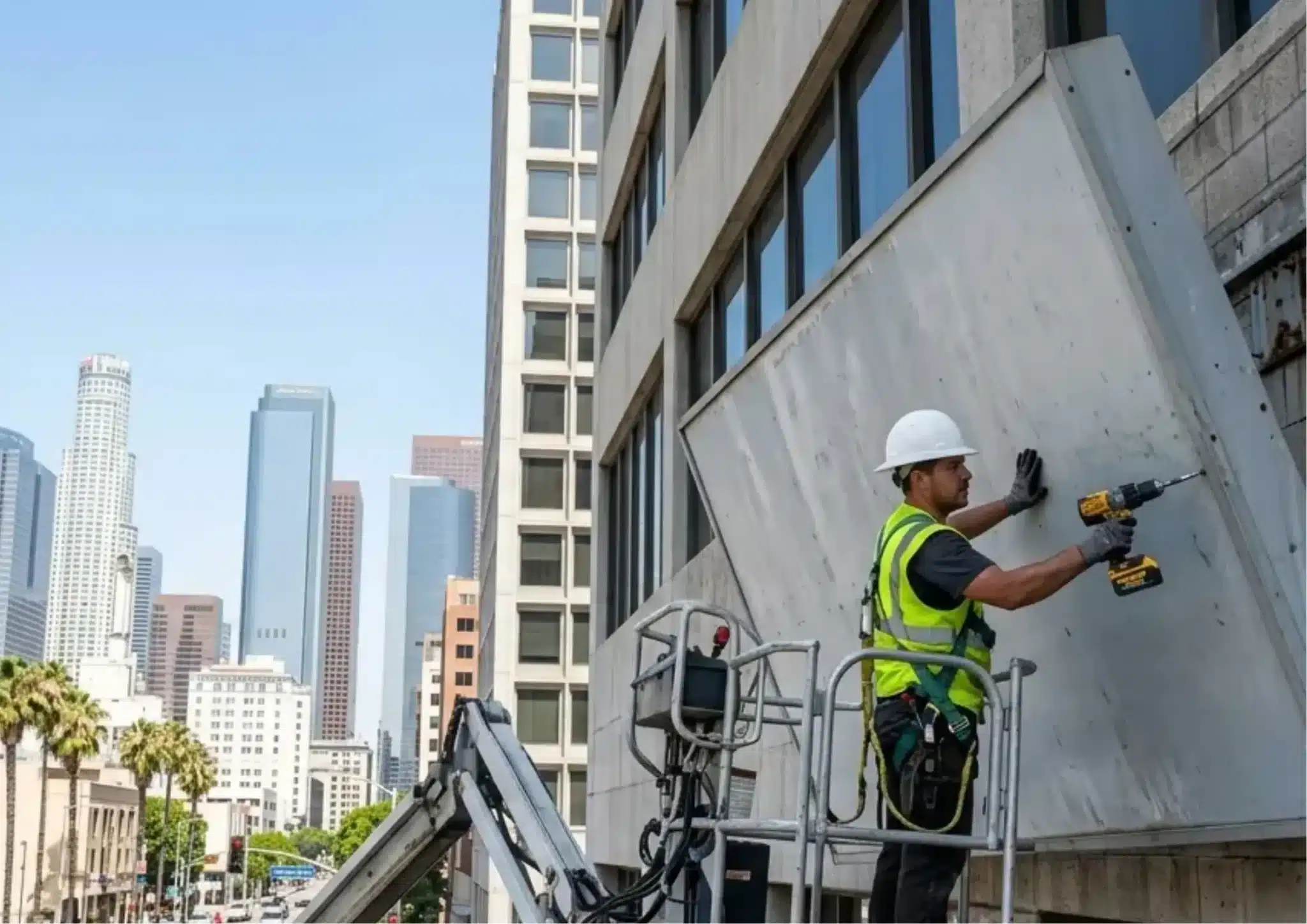
A dark storefront sign is a closed sign, whether or not the doors are open. Customers driving down Sepulveda at seven in the evening read an unlit facade as a business that has shut down, and that impression forms long before anyone checks hours online. This is the practical case for treating commercial sign repair in Los Angeles as maintenance on a revenue asset rather than a cosmetic errand, and it is why sign service and maintenance tends to pay for itself faster than owners expect.
Most sign failures are also smaller than they look. A channel letter set that has gone half dark rarely needs rebuilding. It usually needs a power supply, a run of modules, or a repair to the point where water has been getting in for two years.
What Actually Fails on a Commercial Sign
Signs fail in a limited number of predictable ways, and knowing them helps an owner describe the problem accurately when calling for service.
- Power supplies and drivers. The most common failure on LED signage. One supply typically feeds a group of letters, which is why signs often go dark in sections rather than all at once.
- LED modules. Individual modules dim or fail, producing patchy or uneven illumination across a face that used to look uniform.
- Neon transformers and electrodes. On older signage, flickering or a section that will not strike usually points here rather than to the tube itself.
- Water intrusion. Failed sealant at seams, penetrations, or the raceway lets water into the can, where it corrodes wiring and hardware from the inside.
- Faded or yellowed acrylic faces. Ultraviolet exposure degrades the face material and the applied vinyl, turning saturated brand colors chalky.
- Mounting hardware. Corroded fasteners, failing anchors, and sagging raceways, which are a safety issue rather than an appearance issue.
- Controls. A failed photocell or time clock leaves a perfectly functional sign switched off, and it is the first thing worth checking.
Why Los Angeles Conditions Shorten Sign Life
Signage in Southern California ages differently than signage in milder or shadier markets. Ultraviolet load is the dominant factor. Sustained direct sun breaks down acrylic, vinyl, and paint faster here than in most of the country, and south and west facing installations take the worst of it.
Coastal moisture adds a second variable. Businesses on the Westside and toward the beach cities deal with salt-laden air that accelerates corrosion at fasteners, electrical connections, and any point where dissimilar metals meet. Add daily temperature swings that expand and contract sealed joints, and the failure mode for a lot of Los Angeles signage is simply a seal that gave up.
Diagnosing a Sign That Has Gone Dark
Before scheduling service, a few checks narrow the problem and shorten the visit.
- Confirm the circuit. Check whether the breaker feeding the sign has tripped. This resolves more calls than people expect.
- Check the timer or photocell. If the sign will illuminate on a manual override but not on schedule, the control is the fault, not the sign.
- Note the pattern. Whole sign dark, one section dark, or scattered letters dim each point toward a different component.
- Look for water staining. Rust streaks below the sign or discoloration on the face indicate intrusion that needs sealing along with the electrical repair.
- Photograph it at night. A night photo tells a technician more than a description does, and it helps with quoting before anyone climbs a lift.
Do not attempt repairs on an illuminated sign without proper licensing and equipment. These are line voltage systems, frequently at height, and California licenses sign work under a dedicated contractor classification for that reason.
Commercial Sign Repair or Full Replacement: Making the Call
Repair is usually the right answer, but not always. The decision generally comes down to four questions.
- Is the structure sound? Cans, raceways, and mounting in good condition favor repair, since the expensive part of a sign is already in place and permitted.
- How old is the illumination? A sign still running fluorescent lamps or aging neon may cost less to retrofit to LED than to keep repairing in pieces.
- Has the brand changed? If the logo, colors, or business name have shifted since installation, repairing an outdated sign spends money preserving the wrong message.
- How many repairs in how long? A third service call in two years on the same sign is a signal that components are reaching the end of their service life together.
Replacement also reopens questions that a repair does not. New signage may trigger current code requirements and a fresh permit, whereas a like-for-like repair to an existing permitted sign is frequently treated differently. That distinction is worth understanding before choosing the path.
Permits and Code Considerations in Los Angeles
Los Angeles regulates signage closely, and the rules vary by zone, by corridor, and by whether a property sits in a specific plan area or a historic district. Requirements also differ across the independent cities inside the county, so a business in Culver City or Beverly Hills is working under a different set of rules than one in the City of Los Angeles.
As a general framework, straightforward repair that restores an existing permitted sign to its original condition is handled differently from work that changes a sign’s size, height, illumination, or copy. Face replacements, structural modifications, and conversions from one illumination type to another are the cases most likely to require review. Because the specifics depend on the jurisdiction and the scope, confirming the requirements through sign permitting support before work begins prevents the expensive version of this problem, which is a completed installation that has to come back down.
Landlord approval is the other frequently missed step. Most commercial leases give the property owner authority over storefront signage, and retail centers often maintain their own signage criteria that are stricter than city code.
Retrofitting and Restoring Older Signage
Two paths exist for aging signs that are worth keeping.
Retrofitting converts an existing sign to current illumination while preserving the cabinet and the face. Older neon and fluorescent installations are common candidates, and the appeal is lower energy draw and fewer service calls. That said, neon is not automatically obsolete. For businesses whose identity is bound up in the look of genuine neon signage, repairing the original is often the better decision, since LED does not reproduce the exact quality of neon light.
Restoration applies where the sign itself carries value. Los Angeles has an enormous stock of mid-century commercial signage, and vintage pieces frequently deserve historical sign restoration rather than replacement. Signs in historic districts may also be subject to preservation requirements that limit what can be altered.
Key Takeaways
- Most commercial sign repair involves power supplies, LED modules, transformers, seals, or controls rather than the sign structure itself.
- Ultraviolet exposure and coastal moisture are the two conditions that shorten sign life across Los Angeles.
- A tripped breaker or a failed photocell explains a surprising share of dark signs, so check those first.
- Repair generally makes sense while the structure is sound and the branding is current.
- Like-for-like repair and sign alteration are handled differently for permitting, and requirements vary by jurisdiction across the county.
- Water intrusion repairs should always include resealing, or the same failure returns.
Frequently Asked Questions
Half of my channel letters went dark at once. What does that mean?
That pattern almost always indicates a failed power supply, since one supply typically feeds a group of letters. It is among the more straightforward repairs and rarely requires removing the sign.
Do I need a permit to repair my existing sign?
It depends on scope and jurisdiction. Repairs that restore an existing permitted sign to original condition are generally treated differently from work that changes size, illumination, or copy. Confirm with the relevant building department, or have your sign contractor confirm it, before scheduling the work.
Can a faded sign face be restored, or does it have to be replaced?
It depends on whether the acrylic itself has degraded or only the applied graphics have faded. Vinyl and printed graphics can often be replaced on a sound face. Acrylic that has yellowed or become brittle throughout usually needs a new face.
Is it worth converting my neon sign to LED?
Sometimes. Conversion lowers energy use and maintenance, but it changes the appearance, and genuine neon has a look LED approximates rather than matches. For a business whose signage is part of its character, repairing the neon is frequently the better investment.
Who is responsible for sign repair, the tenant or the landlord?
That is a lease question rather than a code question. Responsibility for storefront signage is usually assigned in the lease, and most leases also require landlord approval before alterations. Review the terms before authorizing work.
How quickly should a damaged sign be addressed?
Illumination problems can wait for a scheduled visit. Structural issues cannot. Loose mounting, a sagging cabinet, or exposed wiring is a safety and liability exposure and warrants prompt attention.
Conclusion
Commercial sign repair in Los Angeles is mostly a matter of catching small failures before they become structural ones. A sealed seam, a replaced power supply, and a functioning photocell keep a sign doing its job for years, while deferred maintenance turns the same sign into a replacement project and a new permit application.
Los Angeles Sign Company repairs, maintains, retrofits, and restores commercial signage for businesses across Los Angeles, Orange County, Ventura County, Riverside County, and San Bernardino County, and handles sign installation when replacement is the better call. If your sign has gone dark, faded, or started showing water damage, reach out today for a free consultation.
