
A sign tells people where you are. A well-crafted engraved plaque tells them who you are. That distinction matters more than most business owners realize, especially in a city like Los Angeles where the built environment is dense, competitive, and historically layered.
From landmark buildings in Pasadena to boutique storefronts in Silver Lake, custom metal plaques and engraved signs serve a purpose that goes far beyond aesthetics. They communicate permanence, credibility, and attention to detail. For building owners, developers, and business operators who want their space to make a serious impression, understanding how these signs work is a practical starting point.
Why Engraved Plaques Hold a Different Kind of Weight
There is something about a metal plaque that signals longevity. Painted signs fade. Vinyl peels. Printed graphics lose their sharpness over time. A well-made engraved plaque, by contrast, looks as intentional on day one as it does a decade later.
This durability is part of the appeal, but it is not the whole story. Engraved plaques carry associations with authority and permanence. Law firms, financial institutions, government offices, medical practices, and high-end hospitality venues all use them for exactly this reason. The material and the craft communicate trustworthiness before a single word is read.
Research from the signage industry consistently shows that exterior building signage influences first impressions within seconds of a visitor’s arrival. For professional services businesses, where credibility is the product, that first impression carries real weight.
Common Applications Across Los Angeles Properties
Los Angeles is an unusually diverse signage market. The city encompasses everything from historic Arts and Crafts bungalows in Pasadena to modernist towers in Downtown LA, and the signage approach needs to fit the architecture and context.
Here are the most common use cases for custom metal plaques and engraved signs across the LA market:
Building Identification and Address Plaques Multi-unit residential buildings, commercial office complexes, and mixed-use developments often use cast aluminum or brushed stainless steel plaques for building identification. These are durable, weather-resistant, and can be finished in a range of ways to complement the facade.
Suite and Directory Signage Office buildings and professional suites need interior wayfinding that matches the building’s character. Engraved metal directory panels are far more professional than printed inserts and hold up far better over the lifecycle of a tenancy.
Memorial and Dedication Plaques Schools, civic buildings, parks, and cultural institutions across Los Angeles regularly commission memorial plaques to honor donors, founders, or historical events. These are typically cast bronze or brass and intended to last for generations.
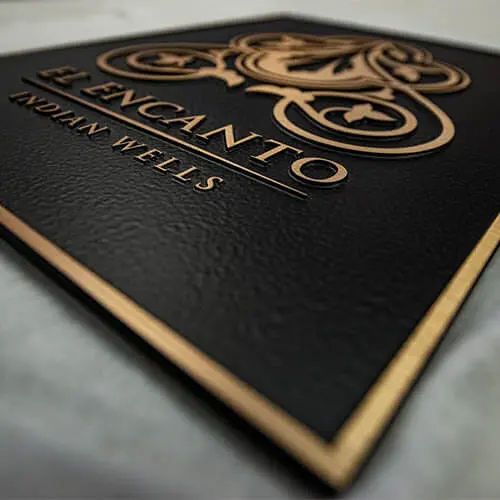
Retail and Hospitality Brand Signage High-end retail in Beverly Hills and West Hollywood, boutique hotels in Hollywood, and restaurants throughout Culver City and Santa Monica use engraved metal signage to reinforce brand positioning. A brushed brass plaque beside an entrance door communicates something a printed sign simply cannot.
Historical and Landmark Markers Los Angeles has hundreds of designated historic properties, and many require signage that respects the character of the original architecture. This is where specialized restoration and fabrication expertise becomes critical.
Choosing the Right Metal and Finish
Material selection shapes everything: the weight of the piece, its cost, how it ages, and how it reads against the surrounding architecture. These are the most commonly used metals for engraved plaques in commercial applications.
Cast Bronze
Bronze is the standard for permanent, high-prestige applications. It is heavy, visually rich, and ages with a patina that many property owners find desirable. Cast bronze plaques are typically used for memorial applications, historical markers, and landmark buildings. They are expensive relative to other options, but the lifespan and visual authority justify the cost for the right application.
Brushed Stainless Steel
Stainless steel offers a clean, contemporary look that works well in modern commercial environments. It is highly resistant to corrosion, which makes it a practical choice for exterior applications in coastal areas like Santa Monica and Venice, where salt air is a real factor. Laser engraving on stainless steel produces sharp, precise lines that hold up well over time.
Aluminum
Cast or machined aluminum is a cost-effective and versatile option. It can be anodized in a range of colors, which opens up more flexibility for brand-specific aesthetics. Aluminum is lighter than bronze or steel, which makes installation easier, particularly on surfaces where load is a concern.
Brass
Brass sits between bronze and stainless steel in terms of formality and cost. It has a warm, classic tone that works well in traditional or transitional architectural contexts. Like bronze, it develops a patina over time, though this can be slowed with lacquering if a polished finish is preferred.
The right choice depends on the architectural context, the intended lifespan, the budget, and the brand identity of the business or property. A skilled fabricator will assess all four before making a recommendation.
Engraving Methods and What They Mean for Your Final Product
The engraving method affects both the appearance and the durability of the finished plaque. Not all engraving techniques produce the same results, and the differences are visible.
Sandblasting: Creates deep, tactile relief by removing material at varying depths. Commonly used on cast metals. Produces a bold, dimensional look well suited to outdoor applications.
CNC Routing: Computer-controlled cutting produces precise, consistent results. Suitable for text-heavy plaques like directories and ADA-compliant signage where legibility is the priority.
Laser Engraving: High-precision and ideal for fine detail, logos, and complex graphics. Works especially well on stainless steel and aluminum. The engraved area can be filled with paint or left as a contrast finish.
Hand Engraving: Still used for high-prestige applications, particularly on awards and commemorative pieces. Rarer and more costly, but produces a result that no machine fully replicates.
For most commercial applications in Los Angeles, CNC routing and laser engraving deliver the best combination of precision, consistency, and cost-effectiveness.
Navigating Los Angeles Permit Requirements for Exterior Plaques
This is where a lot of property owners and business operators get caught off guard. Los Angeles has some of the most layered municipal permitting requirements in the country, and exterior signage is no exception.
Whether a plaque requires a permit depends on several factors: its size, placement, whether it is illuminated, and the zoning designation of the property. Small plaques mounted flush to a building facade in a commercial zone may not require a permit. Larger signs, illuminated elements, or anything attached to a historic structure will typically trigger a review process.
For properties on the Los Angeles Historic Resources Register or in designated historic districts, additional approvals from the Office of Historic Resources may be required. This is not a bureaucratic technicality. Unapproved signage on a historic property can result in fines and mandatory removal, which is costly and disruptive.
Working with a sign company that handles permitting in-house, and understands Los Angeles municipal code, removes a significant source of uncertainty from the process. Los Angeles Sign Company has been navigating this process for over 20 years and handles permitting as part of its full-service approach, which means clients are not left to figure out compliance on their own.
Matching the Plaque to the Architectural Context
A plaque that clashes with its surrounding architecture defeats its own purpose. Matching the material, finish, and typographic style to the building is as important as the content of the plaque itself.
A few practical principles:
- Traditional or classical architecture responds well to cast bronze or brass with serif typefaces and raised lettering.
- Contemporary commercial buildings suit brushed stainless steel or anodized aluminum with clean sans-serif type and precision-cut graphics.
- Industrial or creative spaces can carry more material flexibility, including raw steel or weathered finishes that complement exposed brick or concrete.
- Historic properties often require materials and methods that match the original period character, which sometimes means working with archival references or consulting preservation guidelines.
Firms like the National Trust for Historic Preservation and local bodies like the Los Angeles Conservancy publish guidance on appropriate signage for historic properties, which is worth reviewing before commissioning any work on a designated building.
What the Process Looks Like From Start to Finish
For anyone who has never commissioned a custom metal plaque before, the process can seem opaque. It does not have to be.
A well-structured project typically follows these stages:
- Site survey: The fabricator assesses the mounting surface, surrounding architecture, lighting conditions, and any access constraints.
- Design brief: Content, material, size, finish, and mounting method are agreed upon. This is also where ADA compliance requirements are confirmed if applicable.
- Design approval: A proof is produced showing the layout, type treatment, and proportions. Changes are made at this stage before any material is committed.
- Fabrication: The plaque is manufactured in-house, which allows for quality control at each stage.
- Permitting: If required, permit applications are submitted and tracked.
- Installation: Professional mounting ensures the piece is level, secure, and correctly positioned relative to the architecture.
- Ongoing maintenance: Metal plaques are low maintenance, but periodic cleaning and inspection extend their lifespan considerably.
For anyone browsing examples and exploring options, the range of completed work published under engraved plaques offers a practical reference for what is achievable across different materials and contexts.
Key Takeaways
- Engraved metal plaques communicate permanence and credibility in ways that printed or vinyl signs simply cannot match.
- Material choice, including bronze, stainless steel, aluminum, and brass, should be driven by architectural context, intended lifespan, and brand positioning.
- Los Angeles permitting requirements for exterior signage are complex, particularly for historic properties. Working with a company that manages permitting in-house avoids costly delays.
- The engraving method affects both the look and the durability of the finished piece. CNC routing and laser engraving are the most reliable for commercial applications.
- Matching the plaque style to the surrounding architecture is not optional. It is the difference between a sign that enhances a building and one that undermines it.
Frequently Asked Questions
How long do custom metal plaques typically last? Cast bronze and stainless steel plaques are built to last decades with minimal maintenance. Bronze in particular is often specified for memorial and historical applications precisely because of its longevity. Aluminum and brass have a shorter lifespan in exposed coastal environments but will still perform well for 15 to 20 years with basic care.
Do I need a permit for a metal plaque on my building in Los Angeles? It depends on the size, placement, and whether the sign is illuminated. Small plaques flush-mounted to a building facade in a commercial zone often do not require a permit, but anything larger, illuminated, or attached to a historic structure will likely trigger a review. Always confirm with a qualified sign company before installation to avoid compliance issues.
What is the difference between cast and machined metal plaques? Cast plaques are produced by pouring molten metal into a mold, which allows for dimensional relief lettering and detailed imagery. Machined or routed plaques start with a flat sheet of metal that is then cut or engraved using CNC equipment. Cast plaques tend to have a more traditional, tactile quality. Machined plaques offer sharper precision and work well for text-heavy or graphic-intensive designs.
Can engraved metal plaques be used for ADA-compliant signage? Yes. ADA-compliant tactile signage, which includes raised characters and Grade 2 Braille, can be produced in metal. There are specific requirements around character height, contrast, mounting height, and placement that must be followed. A sign company with ADA expertise will build these requirements into the design from the start rather than treating them as an afterthought.
How do I care for an outdoor metal plaque over time? Regular cleaning with mild soap and water removes surface dirt and prevents buildup that can accelerate corrosion. Bronze and brass plaques benefit from occasional application of a paste wax to slow oxidation. Stainless steel and anodized aluminum are the most forgiving and require the least maintenance. Avoid abrasive cleaners on any metal surface, as they will scratch the finish.
Conclusion
Custom metal plaques and engraved signs are one of the quieter signals a building or business sends. They do not shout. They do not animate or flash. They simply sit there, looking exactly as considered and permanent as the business or institution they represent.
For property owners and business operators in Los Angeles, getting this detail right means thinking through material, finish, engraving method, architectural context, and compliance before the first piece of metal is cut. It is a process that rewards care and punishes shortcuts.
If you are ready to explore options for your property or commercial space, get a quote from a fabricator who understands both the craft and the city.
