
15 Event Signage Ideas for Los Angeles Conferences and Pop-Ups
Event signage carries more weight than permanent signage because it has one chance to work. A storefront sign gets years to be noticed. A conference has two days, a pop-up might have a weekend, and everything the audience needs to understand has to be legible the moment they arrive. The good news is that a well-planned package is mostly straightforward fabrication. The complications are venue rules, material certifications, and lead times, and those are what separate a smooth install from a scramble. These are fifteen formats worth considering, and the practical constraints to plan around when commissioning custom signage for an event.
SHORT ANSWER
Cover three jobs: helping people find things, making the brand visible, and giving sponsors or products their space. Wayfinding, registration, and room identification handle the first. Step-and-repeat walls, hanging banners, and dimensional letters handle the second. Booth graphics, sponsor panels, and sidewalk signs handle the third. Before ordering anything, confirm your venue’s rigging and material rules, check whether indoor decorative materials need flame certification, and build in time for permits if anything faces the street.
Wayfinding and Flow
1. Entrance gateway or archway
The first thing attendees see, and the element that tells them they are in the right place. A branded arch, a freestanding portal, or a large entry banner sets the tone and photographs well, which matters when attendees are the ones distributing your images.
2. Directional wayfinding
Freestanding or wall-mounted panels directing people to registration, sessions, restrooms, and exits. Undervalued and the thing attendees remember when it is missing. On a multi-room venue, plan the signage from the perspective of someone arriving late and confused, since that is who needs it.
3. Registration and check-in signage
Large, high-contrast, readable from the back of a queue. Splitting by line, such as pre-registered versus walk-up, reduces congestion more effectively than staff repeating themselves.
4. Room and session identification
Panels or easel-mounted boards outside each space, ideally with the session name and time rather than just a room number. Interchangeable inserts let one frame serve a multi-day agenda.
5. Floor graphics
Adhesive graphics applied to flooring for directional arrows, queue spacing, sponsor placement, or brand moments. They use space nothing else occupies, and the practical requirements are a suitable floor surface and a removable adhesive that will not damage it. Confirm both with the venue first.
Brand Presence and Impact
6. Step-and-repeat media wall
The repeating logo backdrop used for photos and interviews. It works because every photo taken in front of it carries the brand, which makes it one of the few signage investments with measurable afterlife. Size it for the number of people who will stand in front of it, and light it properly if photography matters.
7. Hanging and ceiling banners
Suspended above the floor, visible across a large room from any position. These deliver more visibility per dollar than almost anything at floor level in a big venue. They are also the element most governed by venue rules, since rigging usually has to be arranged through the venue or an approved contractor.
8. Window and facade graphics
For a pop-up in a vacant retail space, printed vinyl on the glass transforms an empty storefront into a branded one quickly and inexpensively. Perforated film lets you cover the glass while keeping visibility from inside.
9. Dimensional logo letters
Fabricated letters, illuminated or not, giving a brand mark physical presence rather than printed flatness. Worth considering when the same brand appears at several events through the year, because a durable set amortizes across all of them.
10. Tension fabric displays
Printed fabric stretched over a frame. Large format, lightweight, packs down small, and travels well. The obvious choice for organizations doing multiple events in different cities.
Sponsors, Booths, and Street Level
11. Sponsor recognition panels
Tiered displays acknowledging sponsors by level. This is contractual signage as often as decorative, so confirm sizing and placement obligations before fabrication rather than discovering them at install.
12. Booth and counter graphics
Table throws, counter fronts, backwalls, and header signage. The consideration people miss is height: anything below table level is invisible in a crowded hall, so put the important information up.
13. Retractable banner stands
Self-contained roll-up displays that set up in under a minute. Portable, reusable, and the workhorse of the category. Order the graphic separately from the hardware so the stand survives a rebrand.
14. A-frame and sidewalk signs
Street-level presence for pop-ups and venue entrances. Effective and the most regulated item on this list, since anything placed on a public sidewalk is subject to local rules that vary between jurisdictions across Los Angeles County.
15. A photo moment
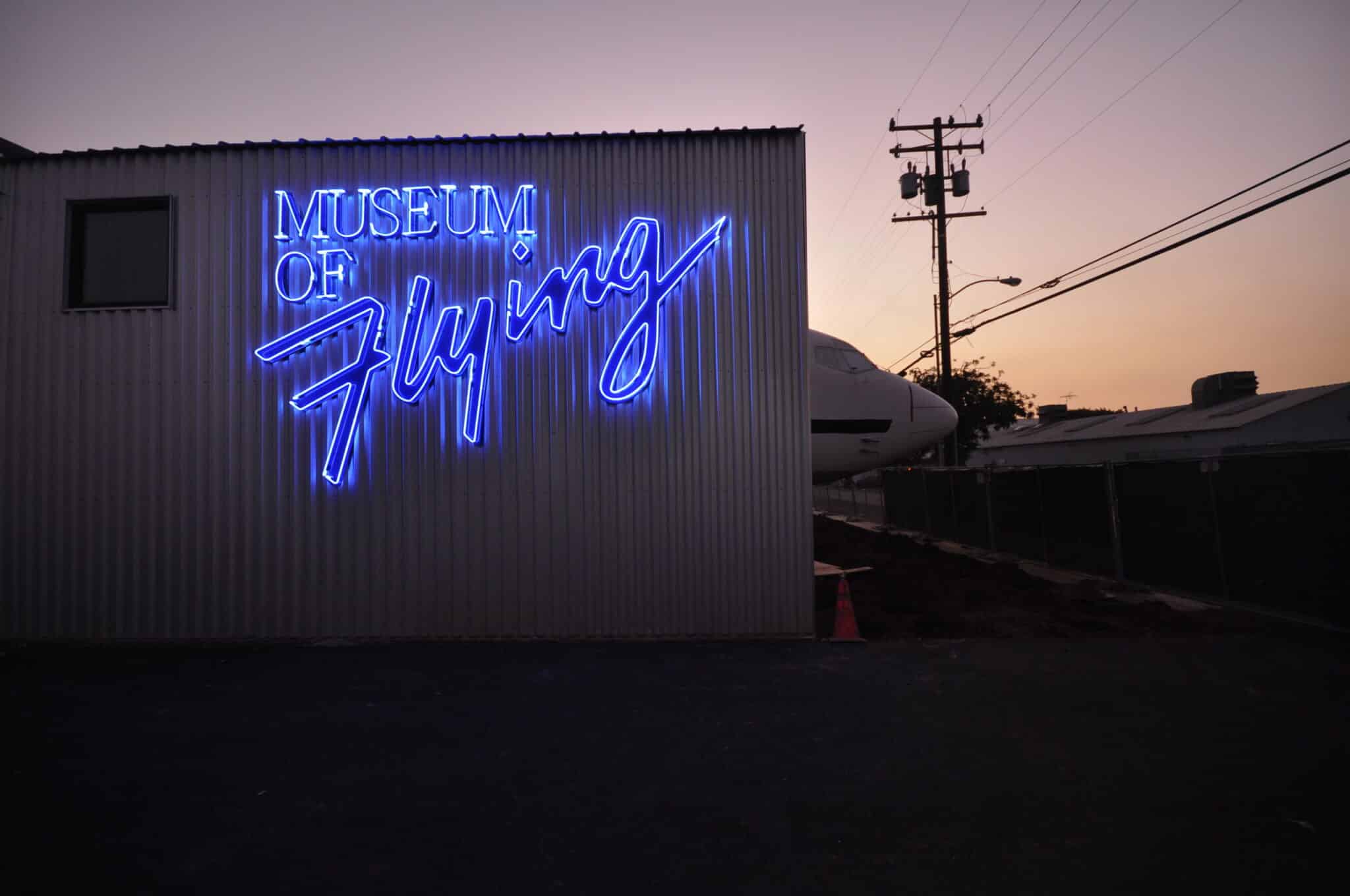
An illuminated sign, a dimensional phrase, or a neon-style installation built specifically to be photographed. In a city where attendees document everything, a well-made photo moment distributes your event further than the event itself reaches.
Event Signage Rules Venues and Cities Enforce
This is where event signage projects go wrong, and none of it is about design.
Venue rules come first. Convention centers and hotels have their own requirements covering what can be hung, how it is rigged, what adhesives may touch walls and floors, and whether installation must go through in-house or approved contractors. Get the venue’s signage guidelines before designing anything, because they frequently constrain size, placement, and method.
Material certification matters indoors. Decorative materials used in public assembly spaces in California are generally required to meet flame resistance standards, with documentation available on request. Fabrics, banners, and drapery in an event space fall into this category, and a fire marshal inspection before doors open is not the moment to learn your backdrop lacks certification. Specify flame-certified material from the outset and keep the documentation with your event file.
Anything facing the street may need a permit. Exterior banners, sidewalk signs, and window graphics on a pop-up are regulated as signage, and temporary banner permits typically carry duration limits. Requirements differ across the City of Los Angeles and the surrounding independent cities, so confirm through sign permitting for your specific address rather than assuming what applied at a previous venue.
Landlord approval applies to pop-ups. A vacant retail space still has an owner, and window graphics and exterior signage usually need their sign-off alongside any city requirement.
Reusable or Single-Use
The cost question worth answering early.
Make it reusable where the content does not change: logos, brand marks, tension fabric backdrops, banner stand hardware, and dimensional letters. These amortize across events and cost less per appearance each time out.
Accept single-use where content is dated: session boards, year-specific graphics, sponsor panels tied to one event’s roster. Designing these to be reusable usually means compromising the message to avoid the date, which is a poor trade.
A sensible package separates the two deliberately, with durable hardware carrying replaceable graphics.
Planning Timeline
- Six to eight weeks out. Obtain venue signage guidelines. Confirm sponsor obligations. Establish what needs permits.
- Four to six weeks out. Finalize artwork and sizes. Submit permit applications for anything exterior.
- Two to four weeks out. Production. Confirm flame certification documentation for indoor materials.
- One week out. Delivery, staging, and confirmation of install access and timing with the venue.
- Install day. Professional installation where rigging, height, or venue rules require it.
- After the event. Removal, and restoration of any surface that was altered.
That last item is the one that gets forgotten. Adhesive graphics, mounted panels, and exterior installations all have to come down, and venues and landlords generally expect surfaces returned to their prior condition. Building removal into the plan avoids a rushed teardown and a deposit dispute.
Key Takeaways
- Event signage does three jobs: navigation, brand presence, and sponsor or product space.
- Wayfinding is the most undervalued element and the most noticed when absent.
- Hanging banners deliver the most visibility per dollar in large venues and are the most rigging-restricted.
- Step-and-repeat walls carry the brand into every photo taken in front of them.
- Venue guidelines constrain size, placement, and installation method, so obtain them before designing.
- Indoor decorative materials in California generally require flame resistance certification.
- Anything exterior or street-facing may require a permit with duration limits.
- Separate reusable hardware from dated graphics to control cost across multiple events.
Frequently Asked Questions
How far in advance should event signage be ordered?
Six to eight weeks is comfortable for a full package, and longer if anything needs a permit. Simple reprints on existing hardware move faster, but venue approvals and permitting are the elements that cannot be compressed.
Do indoor event banners need to be flame rated?
Decorative materials in public assembly spaces in California generally must meet flame resistance requirements with documentation available. Specify certified material and keep the paperwork with your event file.
Can I hang banners from the ceiling at any venue?
Not without checking. Rigging is typically controlled by the venue and often must be performed by in-house or approved contractors, with limits on weight and attachment points. Confirm before designing anything suspended.
What signage works best for a short pop-up?
Window and facade graphics for presence, a retractable banner or two inside, and an A-frame at street level if permitted. That combination reads as established without committing to permanent fabrication.
Do I need a permit for a banner at my event?
For exterior or street-facing signage, frequently yes, with duration limits attached. Interior signage inside a private venue generally falls under venue rules rather than city permitting. Requirements vary by jurisdiction across the county.
What should be reusable versus printed fresh?
Keep hardware, brand marks, and undated backdrops reusable. Print fresh anything carrying a year, a date, an agenda, or a sponsor roster, since designing around those compromises the message.
Conclusion
Good event signage is mostly planning. The formats are well established, and a package combining wayfinding, a strong brand moment, and clean sponsor and booth presence covers nearly every conference or pop-up. What determines whether it goes smoothly is obtaining venue guidelines early, specifying certified materials for indoor use, handling permits for anything facing the street, and remembering that everything you install has to come back down.
Los Angeles Sign Company designs, fabricates, permits, installs, and removes signage for businesses and events across Los Angeles, Orange County, Ventura County, Riverside County, and San Bernardino County. If you are planning a conference, activation, or pop-up, reach out today for a free consultation.
