
Walk into a well-designed retail space or office in Silver Lake or West Hollywood, and within seconds you’ve formed an opinion about the brand. Most of that impression doesn’t come from a logo on a desk. It comes from the walls. Research consistently shows that visual environment directly influences how customers and employees experience a space, yet wall graphics remain one of the most underutilised branding tools in commercial interiors.
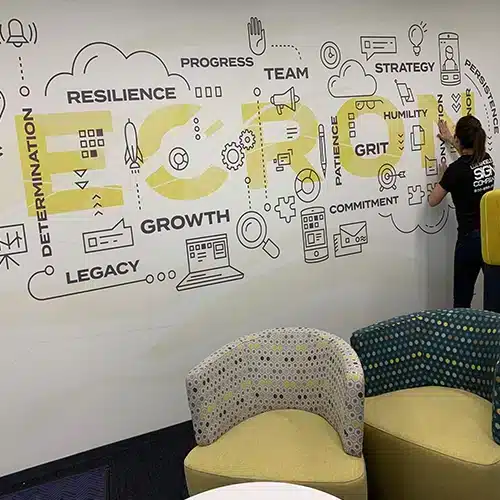
For businesses across LA, from boutique retailers in Culver City to tech offices in Playa Vista, the walls are essentially blank real estate. Branded wall graphics, large-format murals, and custom wall wraps can turn that space into something that works for the business every hour of every day. Providers specialising in commercial wall murals in Los Angeles know this is one of the fastest-growing segments of interior commercial branding, and it’s easy to see why once you understand the options.
Why Wall Graphics Are a Serious Branding Asset, Not Just Decoration
There’s a tendency to treat wall murals as aesthetic extras, something to consider after the signage budget is spent. That framing misses the point.
A branded wall graphic is a communication tool. It tells customers who you are before a single staff member speaks to them. In an office, it reinforces culture and values for employees who spend eight or more hours a day in that environment. According to a Gallup workplace study, employees in well-designed environments that reflect company culture report significantly higher engagement scores.
For retail specifically, visual merchandising research from Retail Design Institute has consistently found that in-store visuals are among the top factors influencing unplanned purchase decisions. The wall behind your product display is not neutral space.
The Difference Between a Mural and a Wall Wrap
These terms get used interchangeably, but they describe different products:
- Wall murals: Large-scale printed or hand-painted graphics applied directly to a wall surface. Often used for brand storytelling, lifestyle imagery, or bold artistic statements.
- Wall wraps: Vinyl-based applications that can cover entire wall sections, including textured surfaces. More durable in high-traffic areas and easier to update than painted murals.
- Dimensional wall graphics: Cut lettering, raised logo panels, or layered graphic elements that create depth and shadow. Popular in reception areas and boardrooms.
- Window-to-wall continuations: Graphics that carry branding from window vinyl across interior walls, creating a seamless branded environment.
Each product type has a purpose. Choosing the wrong one for the application is one of the most common mistakes businesses make when commissioning interior graphics.
Where Wall Murals Work Best in Commercial Spaces
Not every wall benefits from a mural. Placing graphics strategically matters more than covering as much surface as possible.
Retail Spaces
In retail, the highest-value locations for wall graphics are:
- The back wall: Visible from the entrance, it acts as the first focal point and sets the tone for the entire shopping experience.
- Fitting room corridors: High dwell-time areas where customers are stationary and receptive. Branded graphics here reinforce purchase intent.
- Behind the point of sale: The last impression before a customer leaves. A well-executed mural here increases brand recall.
A fashion boutique in Santa Monica, for example, might run a full-bleed lifestyle mural across the back wall using imagery that matches the season’s collection. That wall becomes shareable content for customers posting on social media, extending its reach far beyond the four walls of the store.
Office Environments
In office settings, the strategy shifts. The goal is less about customer conversion and more about culture and retention.
The most effective locations include:
- Reception walls: These carry the brand identity for every visitor, client, and new hire who enters the building.
- Collaboration zones: Open areas where employees gather for brainstorming or informal meetings. Inspiring murals or brand mission statements on these walls reinforce company values without feeling forced.
- Hallway walls: Long corridors are often wasted space. A well-placed timeline graphic showing a company’s growth, or a locally inspired mural referencing LA’s architecture or culture, keeps those corridors visually active.
Materials and Durability: What to Know Before You Commit
The material used for a wall graphic determines everything from how it looks on day one to how it holds up three years later. This is an area where cutting corners costs more in the long run.
Vinyl Options
Cast vinyl is the premium choice for commercial applications. It conforms to uneven surfaces, resists shrinking, and holds print quality for years. Calendered vinyl is cheaper but can lift at edges and fade faster, making it suitable only for short-term applications like pop-up retail or event installations.
For textured walls, like exposed brick or rough plaster, air-release vinyl with a flexible adhesive is essential. Without it, bubbling and lifting are almost inevitable within weeks.
Print Quality and Coating
UV-resistant laminate coatings are non-negotiable for any wall graphic exposed to direct sunlight or positioned near windows. LA’s sun intensity accelerates colour fade on unprotected prints significantly faster than in less sunny climates.
Matte laminate tends to work better in retail environments where you want to minimise glare from overhead lighting. Gloss laminate is better for photography-based murals where colour depth and contrast are the priority.
Surface Preparation
A common reason wall graphics fail early is inadequate surface preparation. Walls need to be clean, primed, and free of moisture. Any paint that’s peeling or unsound will cause the graphic to lift, regardless of how good the vinyl is. Professional installers assess this during a site survey, which is worth scheduling before any material decisions are finalised.
The Design Process: From Concept to Wall
Getting a wall mural from idea to installation involves more steps than most clients expect. Understanding the process upfront prevents timeline surprises.
Step 1: Site Survey
Before any design work begins, measurements and wall condition assessments are essential. Outlet positions, light switches, trim details, and surface texture all affect the final design.
Step 2: Concept and Layout
This is where the creative direction is established. A strong custom sign design process accounts for viewing distance, lighting conditions, and how the graphic interacts with furniture and architectural elements. A design that looks great on a screen can feel wrong on a wall if scale and proportion aren’t calibrated for the physical space.
Step 3: Proofing
Large-format wall graphics benefit from physical proofs, particularly for colour-critical applications. Digital proofs are faster, but a test strip printed on the actual substrate and viewed under the space’s lighting conditions will catch colour shifts that a monitor won’t show.
Step 4: Production and Installation
Print quality at scale requires industrial large-format printing equipment. The sign manufacturing stage involves not just printing but panel planning, seam placement, and material selection to ensure the finished installation looks seamless. Installation itself, for large murals, typically takes between four hours and two days depending on complexity and wall surface.
Permits and Considerations for Interior Graphics in LA
Most interior wall graphics don’t require permits. That’s one of the reasons they’re attractive to businesses that have dealt with LA’s complex exterior signage approval process.
However, there are exceptions:
- Tenant improvement permits: If wall graphics are being installed as part of a broader renovation, the TI permit may need to include them.
- Historic buildings: Properties on LA’s historic register may have interior restrictions, particularly if the mural involves permanent applications like paint or adhesive.
- Retail in managed properties: Some commercial landlords, particularly in premium retail districts like Beverly Hills or Melrose, require approval for any wall changes. Always review the lease and get written landlord approval before installation begins.
These aren’t obstacles so much as checkboxes. Most are straightforward once you know to look for them.
Key Takeaways
- Wall murals and branded graphics are functional branding tools, not just aesthetic additions. They influence customer perception, employee engagement, and brand recall.
- The right product type depends on the application. Wall wraps, dimensional graphics, and large-format murals each have specific use cases.
- Material quality determines longevity. Cast vinyl with UV laminate is the standard for any commercial installation that needs to last.
- Strategic placement matters more than coverage. Focus on high-dwell and high-visibility locations.
- The design process, from site survey to installation, involves multiple technical steps. Skipping any of them is usually the reason graphics fail or disappoint.
Frequently Asked Questions
How long do commercial wall murals typically last? A properly installed commercial wall mural using cast vinyl with UV-protective laminate should last five to seven years in most indoor environments. Areas with direct sun exposure may see some fade before that without the right coating. Regular cleaning with mild soap and water extends the life of the graphic significantly.
Can wall wraps be removed without damaging the wall? Yes, in most cases. Quality vinyl, applied to a properly primed and painted surface, removes cleanly with heat applied during the removal process. Walls painted with low-quality paint or surfaces that weren’t prepared correctly are more likely to see some surface damage. A professional removal service handles this carefully to minimise any wall repair needed.
How much does a commercial wall mural cost in Los Angeles? Costs vary considerably depending on size, material, complexity of design, and installation conditions. A simple single-panel wall wrap for a small retail space will cost far less than a multi-panel dimensional mural across a large office reception. The most accurate approach is to get a custom quote after a site survey, since square footage alone doesn’t capture all the variables.
What’s the difference between office wall murals and retail wall graphics? The products are often similar, but the design goals differ. Office murals tend to focus on culture, mission, and spatial inspiration. Retail wall graphics lean toward lifestyle imagery, product storytelling, and seasonal campaigns. The material specifications may also differ based on foot traffic levels and cleaning frequency.
Do I need to prepare my walls before installation? Yes. Walls should be clean, smooth, and painted with a quality paint that has fully cured. Fresh paint typically needs at least 30 days before vinyl adhesive will bond properly. Contractors should also repair any cracks or uneven patches beforehand. Most professional installers will identify surface issues during the site survey stage and advise on preparation requirements.
Conclusion
The walls of a commercial space carry more brand weight than most business owners realise until they see a well-executed mural in a competitor’s space. Once the options are clear, the logic is obvious: branded wall graphics are one of the most cost-effective ways to create a consistent, memorable environment that works passively every day.
For businesses in LA, the market is mature enough that quality options and experienced installers are accessible. The key is approaching the project with the same rigour applied to any other significant brand or design decision: define the goal, choose the right product, and don’t cut corners on material or installation. Los Angeles Sign Company works with businesses across LA to design and install branded wall graphics, murals, and signage that do exactly what this article describes, build presence without ongoing cost. The process starts with a conversation, not a commitment.
Check Los Angeles Signs and find out what’s possible for your space.
