
A well-placed rooftop sign can be visible from a mile away. In a city as dense and competitive as Los Angeles, that kind of exposure is genuinely hard to buy through any other medium. But getting a large-format building sign approved, engineered, and installed in LA is a process with real complexity, and the businesses that struggle most are usually the ones that didn’t anticipate it.
If you’re considering rooftop building signs Los Angeles, whether for a new commercial building, a rebranding project, or a multi-tenant property, this guide covers the full picture: what’s involved, what can go wrong, and how to approach it strategically.
Why Rooftop and High-Rise Signs Still Matter
Digital advertising gets most of the attention these days, but outdoor building signage continues to outperform expectations in terms of local brand recall. According to research published by the Outdoor Advertising Association of America, on-premise signage consistently ranks as one of the most effective tools for driving foot traffic and brand awareness among local audiences.
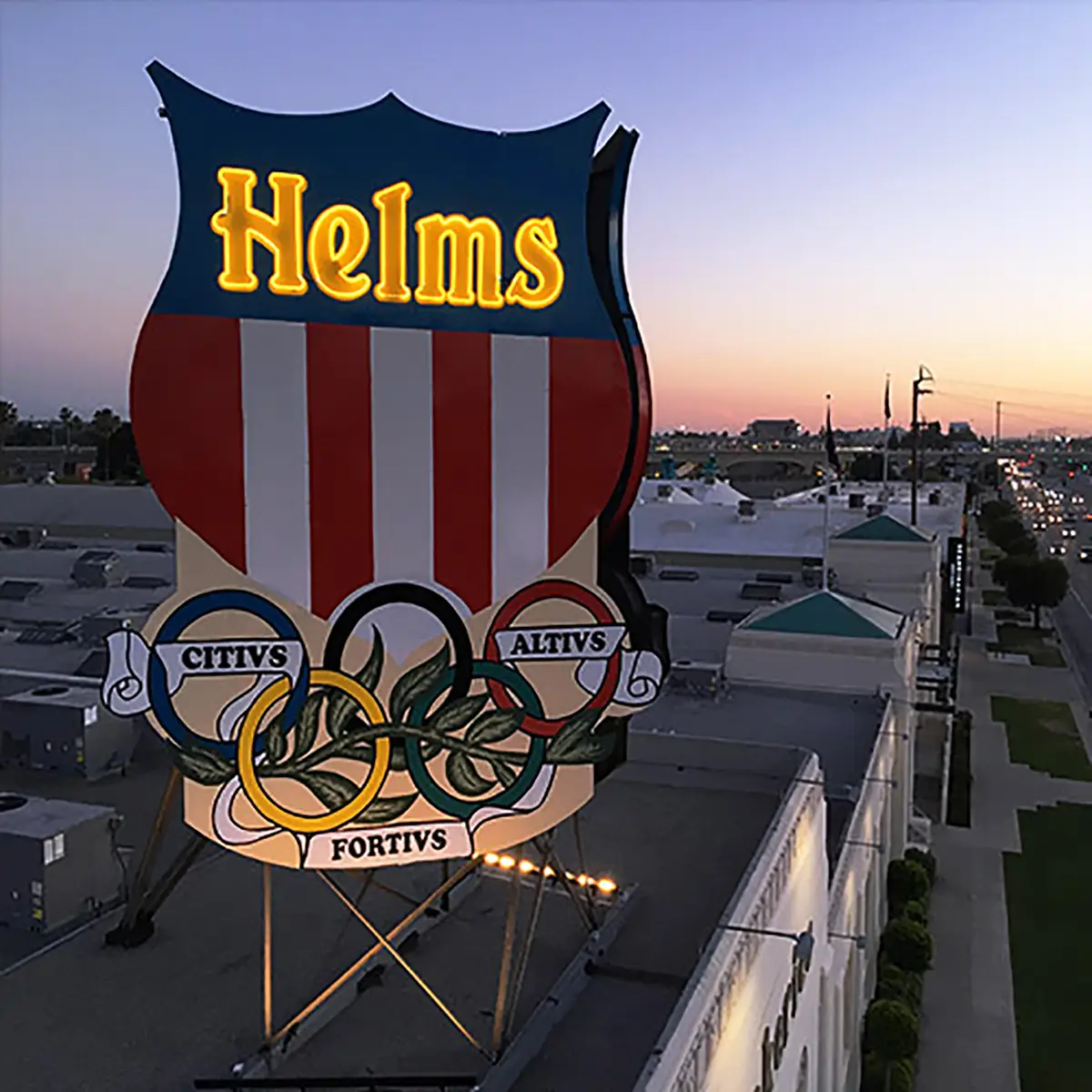
Rooftop signs specifically serve a purpose that ground level signage simply cannot: they place your brand in the sightline of people who are blocks away, on elevated freeways, or viewing a skyline. For anchor tenants in commercial towers, hotels, hospitals, entertainment venues, and large retail operators, that elevated visibility is a genuine competitive asset.
The challenge in Los Angeles is that the path from concept to installed sign is rarely straightforward.
The Regulatory Environment in Los Angeles
Los Angeles has some of the most layered municipal sign regulations in the United States. Unlike smaller cities where a single permit covers most scenarios, LA requires businesses to navigate a combination of:
- LADBS (Los Angeles Department of Building and Safety) requirements for structural permits
- Zoning and Planning Department approvals, which vary significantly by district
- Specific Plan areas, such as Hollywood, Westwood, or the Sunset Strip, which carry their own overlaid restrictions
- Historic preservation reviews, if the building or surrounding area carries any landmark designation
- LAFD clearance in some cases involving electrical rooftop installations
Rooftop signs are treated differently from standard storefront signage in most LA zoning codes. Height restrictions, illumination rules, and setback requirements all apply, and they vary street by street in some neighborhoods.
This is not meant to discourage anyone. It’s just worth understanding upfront that the permitting process for large building signage in California, particularly in LA, requires a methodical approach. Cutting corners at the permit stage almost always creates longer delays than doing it properly from the start.
Engineering: The Part Most People Underestimate
Once you understand the regulatory side, the structural engineering component is the next major consideration. Rooftop signs are not simply mounted signs scaled up in size. They are engineered structures.
A large cabinet sign or channel letter installation on a commercial rooftop needs to account for:
- Wind load calculations, which in coastal LA areas like Santa Monica and Manhattan Beach are particularly demanding
- Seismic load requirements, given California’s earthquake risk
- Dead load analysis, meaning the roof structure must support the sign’s weight without stressing the building
- Anchorage and attachment methods, which must meet California Building Code standards
In many cases, the building’s original structural drawings need to be reviewed to confirm the roof can handle the additional load. A qualified sign engineering team will produce stamped structural drawings that become part of the permit application package.
Proper sign engineering is not just a box ticking exercise. It’s what ensures the sign stays in place through a Pacific storm or a moderate earthquake, and it’s what protects the building owner from liability if something goes wrong.
Common Sign Types Used at Height
Not every sign format works equally well on a rooftop or high-rise facade. The format you choose should reflect viewing distance, ambient light conditions, and the architectural character of the building.
Illuminated Channel Letters
Individual fabricated letters, typically with LED illumination, mounted directly to a rooftop parapet or facade. Highly legible from a distance and well-suited to brand names and logos. These are among the most common choices for commercial towers in Downtown LA and Century City.
Cabinet Signs (Lightboxes)
A single internally illuminated box containing a face panel with printed or vinyl graphics. Easier to manufacture in large formats and often more cost-effective for complex logos. Visibility at night is excellent. Widely used in hospitality and retail contexts.
Dimensional Letters and Logos
Non-illuminated but bold, often fabricated in painted aluminum, stainless steel, or powder-coated metal. Best suited for buildings where the sign benefits from strong natural light and where illumination permits are an added complication.
Halo-Lit (Reverse Channel) Letters
Letters with LED lighting directed toward the mounting surface, creating a glow effect around the letterform. Visually striking, especially at dusk and on darker building surfaces. Popular with upscale commercial and mixed-use developments.
Flexible LED and Digital Panels
These require additional planning given LA’s strict digital sign regulations, but in approved zones they offer the ability to rotate content. This category comes with extra permitting scrutiny and is not viable in most standard commercial zones.
The Installation Process for High-Rise Signage
Large-format rooftop installation is a specialist operation. It typically involves rigging equipment, coordinating building access with property management, and working within specific time windows to avoid disrupting tenants or neighboring properties.
Key stages in the installation process usually include:
- Site survey and measurement: Confirming exact placement, structural attachment points, and access logistics before fabrication begins
- Engineering and permit application: Submitting drawings and waiting for approvals, which in LA can take anywhere from a few weeks to several months depending on complexity
- Fabrication: Manufacturing the sign to exact specifications once permits are in hand
- Installation scheduling: Coordinating crane or rigging access, electrical connections, and safety controls
- Final inspection: Permit compliance inspection by the relevant city department before the sign is considered fully approved
Skipping or rushing any of these steps tends to create problems downstream. A sign installed without a valid permit can be ordered removed, regardless of its quality.
Permitting Specifically for Rooftop Signs in LA
Given how often permitting delays derail sign projects, it deserves its own focus. Several factors make rooftop sign permitting in LA particularly involved:
Zoning restrictions vary by street. A building on one side of Wilshire may face different restrictions than one on the opposite corner. This is not an exaggeration. LA’s zoning map is extraordinarily granular.
Specific Plan areas add an additional layer. If your building sits within a designated Specific Plan, such as the Central City or Warner Center, the rules governing sign height, illumination, and total sign area are set by that plan, not just the base zoning code.
Some rooftop signs require a variance or Conditional Use Permit. Where the proposed sign exceeds what’s permitted by-right, a discretionary approval process applies, which can add months and involves public notice requirements.
Electrical permits are separate. The structural building permit and the electrical permit for an illuminated sign are typically processed separately through LADBS.
Working with a team that handles sign permitting as a core service, not an afterthought, makes a measurable difference here. Experienced permit handlers know which departments to contact, what documentation is needed upfront, and how to flag potential issues before they become delays.
Costs and Timelines: What to Realistically Expect
Rooftop and high-rise signage projects are not cheap, and the timeline is longer than most people expect when they first enquire. Being honest about both sets expectations that lead to better decisions.
Cost variables include:
- Sign size and format (channel letters vs. cabinet vs. dimensional)
- Material choices (aluminum, stainless steel, acrylic, LED specification)
- Structural complexity and engineering requirements
- Whether a crane, lift, or rigging system is needed for installation
- Permitting fees and, if applicable, variance or CUP application costs
Typical timeline stages:
- Site survey and initial design: 1 to 2 weeks
- Engineering and permit application preparation: 2 to 4 weeks
- LADBS permit review: 4 to 12 weeks, sometimes longer for complex projects
- Fabrication once permitted: 3 to 6 weeks
- Installation: 1 to 3 days depending on scope
Plan for a total timeline of three to six months from kickoff to installed sign, with complex or Specific Plan projects sometimes running longer. Businesses targeting a grand opening date need to factor this in early.
Key Takeaways
- Rooftop signs in Los Angeles are subject to layered regulatory requirements that go well beyond a standard sign permit, including structural engineering, zoning compliance, and in some cases discretionary approvals.
- The engineering component is as important as the design. Wind load, seismic load, and dead load calculations are mandatory for any rooftop installation in California.
- Format matters at height. Illuminated channel letters, cabinet signs, and halo-lit letters each suit different building types and viewing distances.
- Permitting timelines in LA can range from a few weeks to several months. Building this into project planning from day one prevents costly delays.
- Working with a full-service sign company that handles design, engineering, permitting, and installation under one roof reduces coordination risk significantly.
FAQ
Can any rooftop in LA accommodate a large sign? Not automatically. The building’s structure must be assessed to confirm it can support the additional load, and the property must be in a zone that permits rooftop signage of the intended size and type. A site survey and zoning check are the essential first steps.
How long does it take to get a rooftop sign permitted in Los Angeles? It varies considerably. Standard commercial projects often take two to four months through LADBS from application to approval. Projects in Specific Plan areas, or those requiring a variance, can take significantly longer, sometimes six months or more.
Do rooftop signs need to comply with California’s seismic standards? Yes. All structural sign installations in California must meet the seismic requirements set out in the California Building Code. This is one reason stamped engineering drawings are required as part of the permit application for rooftop signs.
Is illumination always permitted on rooftop signs in LA? No. Illumination rules vary by zoning district. Some areas restrict illuminated signs entirely, while others limit brightness levels or operating hours. This is confirmed during the permitting process, and it’s worth checking early in the design phase to avoid expensive redesigns.
What happens if a rooftop sign is installed without a permit in LA? The city can issue a stop-work order or a notice of violation requiring the sign to be removed at the owner’s expense. In some cases, fines apply. Unpermitted signs also create liability exposure for the building owner if the sign causes damage or injury.
Conclusion
Rooftop signage in Los Angeles is genuinely high-impact, but it’s also high-stakes from a planning perspective. The businesses that get the best results are typically those that treat it as a structured project rather than a quick installation, giving proper attention to zoning research, structural engineering, and the permitting timeline from the outset.
If you’re evaluating a rooftop or high-rise sign project in Los Angeles, the earlier you bring in a team that handles design, engineering, and permitting together, the smoother the process goes. Contact Los Angeles Sign Company to start with a site assessment and get a realistic picture of what your project involves before committing to a timeline.
