
A study by the Sign Research Foundation found that nearly 76% of consumers entered a business they had never visited before simply because of its signage. For businesses competing in one of the most visually saturated commercial markets in the country, that number matters. A monument sign positioned at the edge of your property, at eye level, visible to passing drivers and pedestrians alike, does something a wall sign or banner simply cannot: it plants your brand into the physical landscape permanently.
If you are considering a monument sign for a Los Angeles location, the range of choices, codes, and logistics can feel overwhelming. This guide breaks it all down, from structure types and material options through the permitting process and what professional installation actually involves. Whether you are opening a new storefront in Culver City, managing a commercial development in Pasadena, or rebranding a multi-tenant complex in Beverly Hills, the decisions you make here will have long-term consequences for visibility and brand perception. Businesses researching monument signs Los Angeles quickly discover that the local regulatory environment and climate conditions make this a more specialised project than it might appear at first glance.
What Is a Monument Sign and Why Do Los Angeles Businesses Use Them?
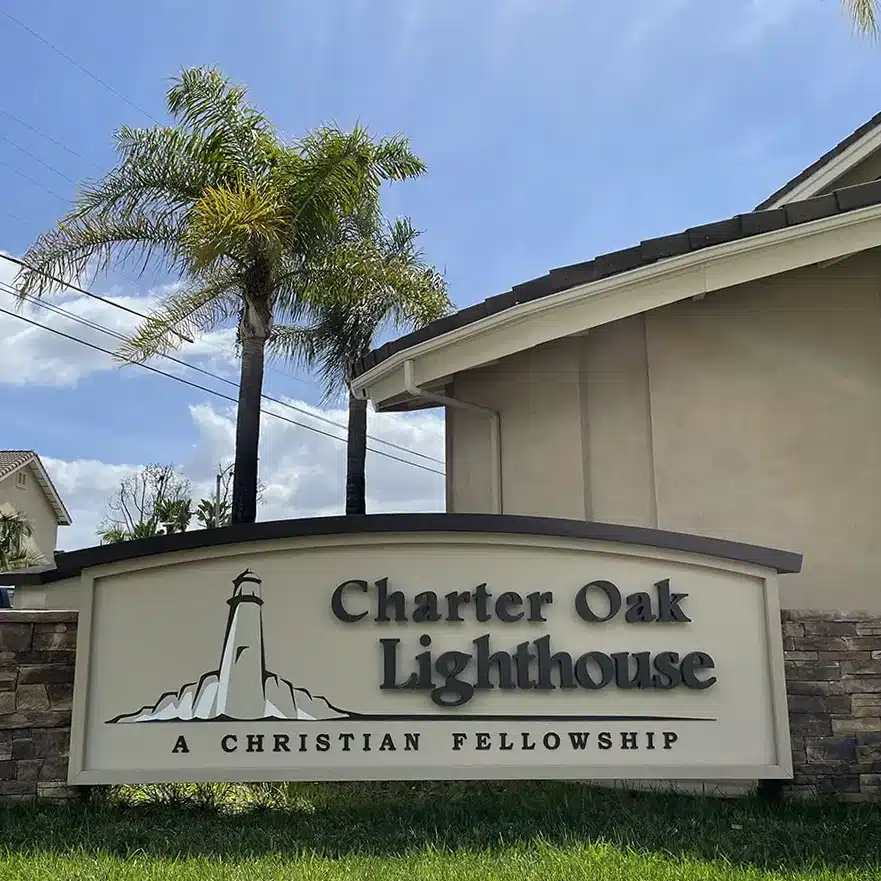
A monument sign is a freestanding, ground-level structure that displays a business name, logo, or directory information. Unlike pole signs, which are mounted on a single vertical post and elevated well above eye level, monument signs sit low to the ground, typically between three and eight feet tall, with a solid base that integrates with the surrounding landscaping or hardscape.
The appeal for LA businesses is practical as much as aesthetic. Ground-level placement puts your branding directly in the sightline of drivers approaching at street speed. In dense commercial corridors like Ventura Boulevard in Studio City or Santa Monica Boulevard in West Hollywood, that visibility window is short, sometimes just a few seconds. A well-designed monument sign maximises that window.
They are also significantly more durable and permanent than pylon signs, which means lower long-term maintenance costs and stronger visual consistency over time.
Types of Monument Signs
Not every monument sign structure is the same. The type you choose should reflect your location, traffic patterns, tenant volume, and brand identity.
Single-Tenant Monument Signs
These are built for one business and typically display a single logo, name, and sometimes a brief tagline or contact detail. Common for standalone restaurants, medical offices, retail shops, and professional services firms. The design can be as minimal or architecturally detailed as the brand demands.
Multi-Tenant or Directory Monument Signs
Multi-tenant signs are standard for strip malls, office parks, and mixed-use developments. They display individual tenant panels, usually in a stacked or modular format, allowing property managers to update individual listings without replacing the entire structure. In LA’s commercial real estate market, where tenant turnover in some corridors is frequent, this flexibility is a significant practical advantage.
Illuminated Monument Signs
Illuminated versions use internally lit channel letters, LED backlighting, or face-lit panels to remain readable after dark. For businesses open in the evening, a restaurant in Burbank or a fitness studio in Silver Lake, for example, illumination is not optional. It is part of basic operational visibility.
LED illumination has become the standard for most new installations in California, partly because of energy efficiency regulations and partly because LED systems outlast fluorescent alternatives by a significant margin.
Carved or Dimensional Monument Signs
High-end residential developments, hotels, corporate campuses, and medical facilities frequently opt for carved stone or dimensional letter monuments. These tend to use natural stone, cast concrete, or high-density urethane to create a sculptural, premium appearance. They communicate permanence and quality in a way that flat panel signs rarely achieve.
Monument Sign Materials: What Works in California’s Climate
Material selection affects everything: longevity, maintenance burden, cost, and how the sign actually looks in the field. California’s climate introduces specific considerations including UV exposure, seismic activity, and in coastal areas, salt air corrosion.
Concrete and Masonry
Poured concrete and brick or stone veneer are among the most durable options available. They handle UV exposure without fading, require minimal maintenance, and can be finished to match a building’s architectural style. The trade-off is cost and installation complexity: masonry foundations require engineering sign-off in LA County, and the installation timeline is longer.
Aluminium and Fabricated Metal
Powder-coated aluminium is a workhorse material for monument sign faces and letter returns. It is lightweight, rust-resistant, and can be finished in virtually any colour. Stainless steel is used for dimensional letters or logo elements where a premium finish is important. Both materials perform well in the California coastal environment when properly treated.
High-Density Urethane (HDU)
HDU foam is a popular choice for carved monument panels. It is significantly lighter than stone or wood, easier to shape in detail, and holds paint well without warping or cracking. Many of the beautifully carved residential estate signs you see in Bel Air or Pacific Palisades use HDU panels set into a masonry or aluminium frame.
Acrylic and Polycarbonate Faces
Used primarily for illuminated panels, acrylic faces diffuse LED light evenly and are available in a wide range of colours. UV-stabilised grades are essential in Southern California, where standard acrylic can yellow and become brittle within a few years of direct sun exposure.
Navigating Monument Sign Permits in Los Angeles
This is where many projects stall. Los Angeles has some of the most complex municipal sign codes in the United States. The City of LA’s Sign Ordinance, along with individual rules from the Department of Building and Safety and often additional overlay district requirements in areas like Hollywood or Venice, creates a multi-layer permitting environment.
Key factors that affect what is permissible for your monument sign include:
- Setback requirements: How far the sign must sit from the property line and from the street kerb
- Height limits: Maximum overall height varies by zone, typically between four and eight feet in most commercial zones
- Area limits: The total square footage of sign face allowed per linear foot of street frontage
- Illumination restrictions: Some districts limit brightness levels or prohibit certain types of animated lighting
- Coastal zone requirements: Properties within the Coastal Commission’s jurisdiction face an additional layer of review
Applying for a sign permit without a clear understanding of these variables often results in delays, revision requests, or rejected applications. Professional sign permitting services handle code research, plan preparation, and agency coordination on your behalf, significantly reducing the risk of a stalled project.
It is worth noting that permit timelines in LA vary considerably depending on the district and the complexity of the application. Simple approvals can take a few weeks. More complex applications in protected overlay districts can take several months. Building that timeline into your project schedule from the beginning is essential.
Monument Sign Installation: What the Process Actually Involves
Installation is more involved than most business owners anticipate. A monument sign is not simply placed on the ground. It requires a structural foundation, utility connections for illuminated signs, and precise placement that accounts for setback measurements and grade changes on the site.
Site Survey
Before any fabrication begins, a site survey establishes the exact dimensions of the available space, checks for underground utilities, assesses the grade and drainage conditions, and confirms that the proposed placement meets code requirements. Skipping this step leads to expensive surprises during installation.
Foundation and Footing Work
Most monument signs require a concrete footing, the depth and diameter of which is determined by the sign’s weight, height, and local wind load requirements. In an earthquake-prone environment like Los Angeles, structural calculations from a licensed engineer are typically required for anything beyond a very small sign.
Electrical Rough-In
Illuminated signs require electrical conduit and wiring to be run to the sign location before the foundation is poured or the base is closed. This work needs to be coordinated with a licensed electrician and inspected before final installation.
Setting and Finishing
Once the base is in place and cured, the sign face panels, letters, and any dimensional elements are installed and secured. Final electrical connections are made and tested. The surrounding landscaping or hardscaping is then restored. A professional sign installation process also includes a final alignment check and a walkthrough with the property owner to confirm everything meets expectations before the crew leaves the site.
How to Choose the Right Monument Sign for Your Business
A few practical considerations to guide your decision:
- Traffic speed and distance: Higher-speed arterials favour larger, bolder sign faces with high-contrast lettering. Pedestrian-scale environments allow for more refined, smaller-format designs
- Brand positioning: A luxury med-spa in Santa Monica and a tyre shop on a commercial strip in Van Nuys both need monument signs, but the appropriate materials, finish, and design language are completely different
- Tenant count: If you manage a multi-tenant property, plan for a changeable panel system from the beginning rather than retrofitting one later
- Maintenance access: Illuminated signs need occasional lamp or LED module replacement. Make sure the cabinet design allows for straightforward access
- Long-term flexibility: If your business might rebrand or expand in three to five years, choose a structure that can be modified without a complete rebuild
Key Takeaways
- Monument signs are one of the highest-impact, lowest-maintenance long-term signage investments a commercial property can make in Los Angeles
- Material choice should account for UV exposure, coastal salt air where applicable, and seismic engineering requirements specific to California
- Illuminated signs using LED systems provide the best combination of energy efficiency and longevity for the Southern California environment
- Permitting in LA is genuinely complex and varies by district; build the permit timeline into your project schedule from day one
- Professional installation requires site survey, engineered footings, and electrical rough-in before the visible sign work even begins
FAQ
How tall can a monument sign be in Los Angeles? Height limits vary by zoning district, but most standard commercial zones in the City of LA permit monument signs between four and eight feet tall. Certain overlay districts and specific boulevards have stricter limits. A permit application will trigger a formal review of the applicable height restrictions for your exact address.
Do I need a permit for a monument sign in LA? Yes. Any permanent freestanding sign in Los Angeles requires a sign permit from the Department of Building and Safety. Illuminated signs also require an electrical permit. The process involves submitting scaled drawings, structural calculations for larger signs, and in some cases, review by additional agencies depending on location.
How long does monument sign installation take from start to finish? From initial design to completed installation, a typical monument sign project in LA takes between eight and sixteen weeks. The largest variable is permitting timeline, which can range from two weeks to several months depending on complexity and the specific permitting jurisdiction.
What is the most durable material for a monument sign in Southern California? Concrete and masonry bases paired with powder-coated aluminium or stainless steel faces perform exceptionally well in California’s climate. For carved decorative elements, UV-stabilised high-density urethane holds up better than natural wood in direct sun and is resistant to the moisture cycles common in coastal areas.
Can a monument sign be updated if a tenant changes or a business rebrands? Yes, with the right design. Multi-tenant signs are built with interchangeable panel systems specifically for this purpose. Single-tenant monument signs can often have their face panels or channel letters replaced without rebuilding the base structure, though significant changes may require a permit amendment.
Conclusion
A monument sign is a long-term infrastructure decision, not just a branding choice. Get the material, structure, and placement right and it will anchor your business’s visibility for decades with minimal upkeep. Get it wrong and you are dealing with fading panels, structural issues, or a city notice about non-compliance within a few years.
Los Angeles Sign Company rewards businesses that understand the local environment, because the permitting landscape, the climate, and the competitive visual density of LA’s commercial corridors all demand more thoughtfulness than a cookie-cutter sign from a catalogue can provide. Take the time to understand your zone’s restrictions, choose materials suited to your location, and work with installers who know what a proper engineered foundation looks like. The result will be a sign that earns its place.
